Aurora Core is the design language that ties together every personal project I’m currently working on. It’s packaged as a production-grade foundation kit rather than a static handoff: token exports in five formats, 26 platform-specific reference implementations, real consumable component libraries for Svelte, Rust, and Python, a Figma library plan, Zeroheight article templates, governance docs, and a set of FastMCP servers so future codegen flows can query the system directly.
Why it exists
I wanted the independent work I do at night to hang together visually, even when the pieces are native desktop apps, web apps, and CLI tools. Ad-hoc color and spacing choices add up fast across a portfolio, and I wanted an AI-friendly source of truth (not just a style sheet) so agents generating components can do the right thing without supervision.
Highlights
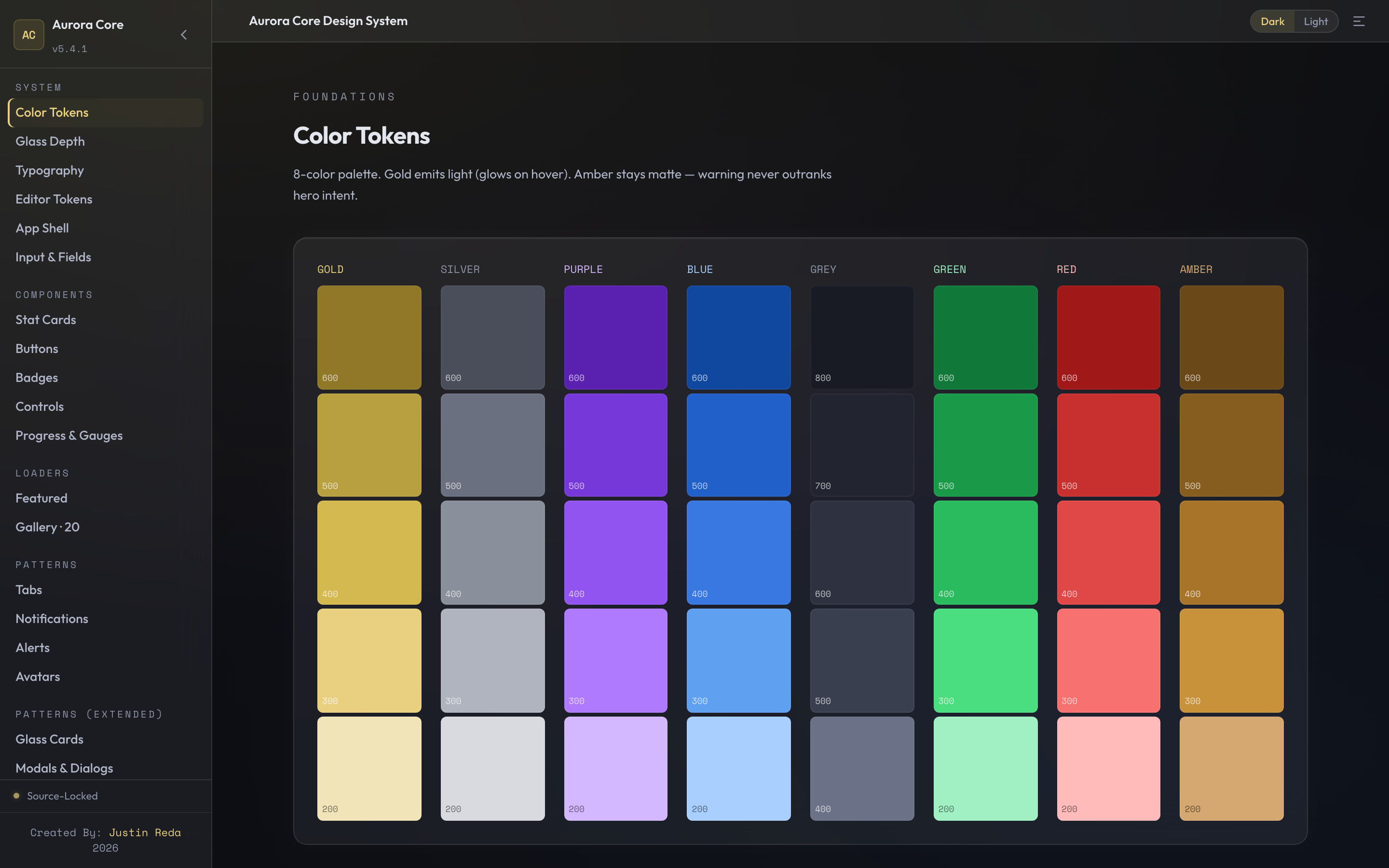
- Seven anti-pattern rules that govern meaning: gold glows, amber is matte, purple is analytical, blue is informational, depth is blur-driven, tracks inherit semantics, toggles live in the secondary spectrum.
- Canonical sampler is a single self-contained HTML file: every component renders live, in both dark and light themes, without a build step.
- Token exports in five formats: JSON, W3C draft, Tokens Studio, CSS custom properties, and a Tailwind preset.
- FastMCP servers expose the system as tool calls so Claude Code and Codex can introspect tokens, fetch component snippets, and validate their output against the design language.
- Reference implementations across web (8), mobile (8), and desktop (10), including Storybook, Tailwind, SwiftUI, and Jetpack Compose targets.
- Shipping platform libraries, not just examples:
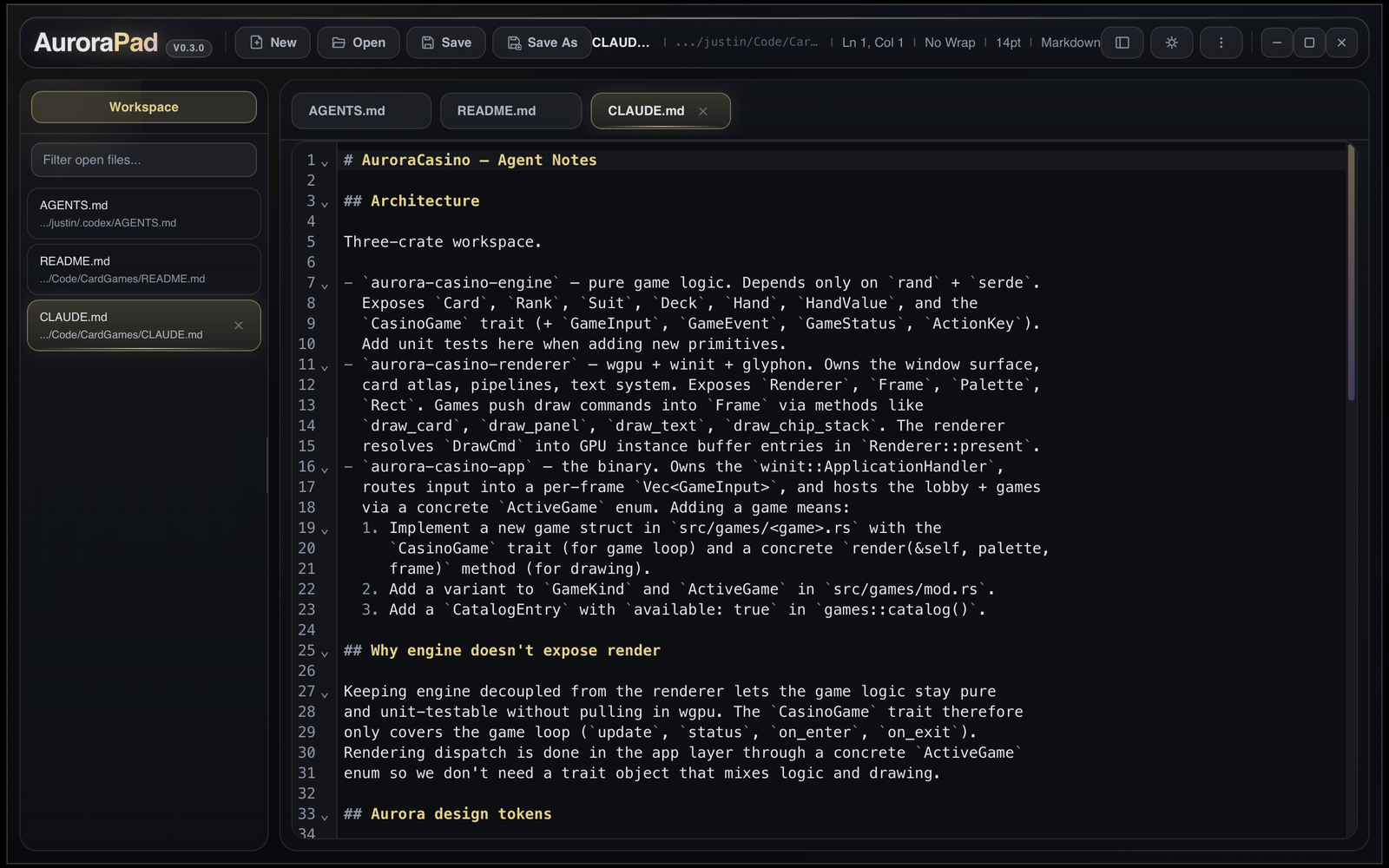
@aurora-core/svelte(25 Svelte 5 components now consumed by Aurora Pad), a published Jetpack Compose module, and Rust/Python packages. - The system reaches into GPU territory: a Rust wgpu game-UI foundation with a six-preset Game UI Lab drives the HUD language for my Rust games.
Technical approach
The authoritative source is a single HTML file with inline CSS and a small JS bundle for interactive demos. Everything downstream (Figma variables, Tokens Studio, W3C exports) is derived from it through export scripts rather than maintained separately. This keeps one source of truth and makes it trivial to verify a token across every consumer.